
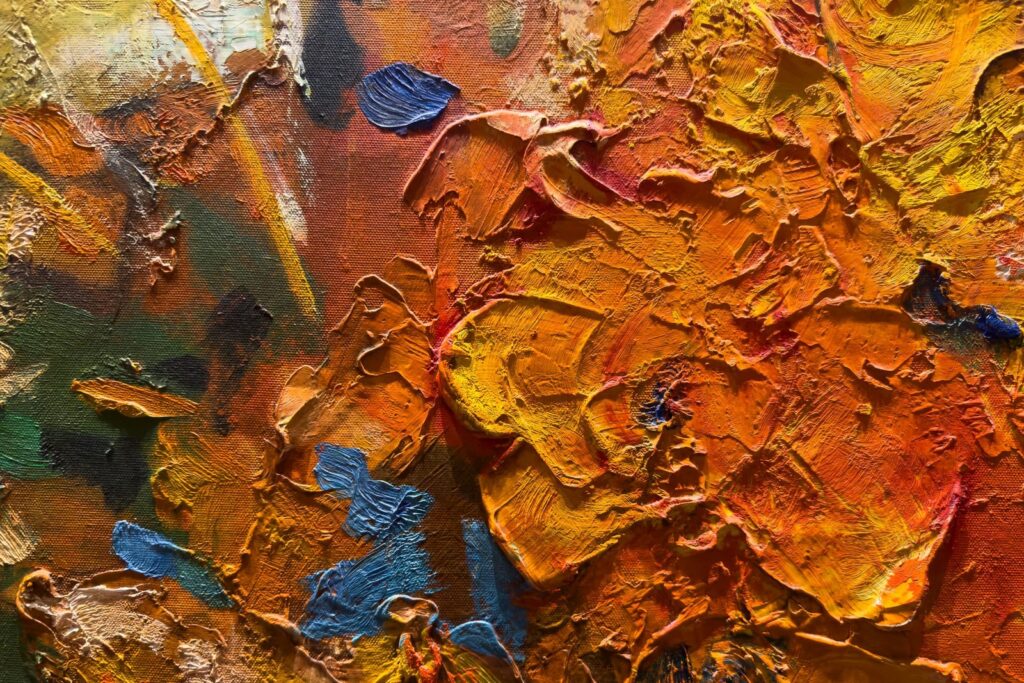
Oil paintings are tougher than they look and more fragile than their owners assume. A well-made canvas can last for centuries, and plenty of them have, but almost every serious problem that brings a painting to a conservator’s studio started with something ordinary: a sunny wall, a hot radiator, a well-meaning wipe with a damp cloth, a frame carried by one person when it needed two. Most of caring for an oil painting is simply not doing those things.
This guide covers what an owner can safely do, and just as importantly, where to stop and call a professional.
Know what you are looking after
A traditional oil painting is a layered object. There is a support, usually canvas stretched over a wooden frame or a rigid panel; a ground layer that prepares the surface; the paint layers themselves; and often a varnish on top. Each layer responds differently to its surroundings. Canvas and wood take up and release moisture and move as they do so, while old paint becomes progressively less flexible. Much of the damage in paintings comes from that mismatch: the support moves, the paint cannot follow, and it cracks.
Modern and contemporary works add further variables. Paintings made with alkyds, acrylics, house paints or mixed media, and works that were never varnished, can be far more sensitive than a traditional varnished oil. When in doubt, treat the surface as delicate.
Where to hang it
Keep it out of direct sunlight. The Canadian Conservation Institute’s guidance on caring for paintings is explicit: do not place a painting in direct sunlight, and do not focus spotlights or picture lamps on it. Light damage is cumulative and cannot be reversed. It fades some pigments, yellows varnish and weakens canvas.
Keep it away from heat and damp. Avoid hanging paintings above working fireplaces or radiators, near heating and air conditioning vents, or in kitchens and bathrooms. Heat, soot and steam all do harm, and so do the rapid swings in temperature and humidity these places produce.
Think about the wall itself. Outside walls in older or poorly insulated buildings can be colder and damper than the room, which creates a different environment behind the painting than in front of it. Small spacers on the lower corners of the frame let air circulate behind the canvas.
Temperature and humidity: stability first
Conservation guidance puts the emphasis on stability. Fluctuations in relative humidity make canvas and wood expand and contract, and repeated movement is what opens cracks, loosens paint and produces the rippling and distortions often seen at the corners of canvases. A steady, moderate environment, the kind most people find comfortable, is far better than one that swings between extremes with the seasons or the heating schedule.
In practice that means avoiding very dry air near heaters in winter and damp, unheated rooms, basements and attics at any time of year. Paintings should never be stored in a garage or loft space, where conditions change sharply from day to night and season to season.
A backing board on the reverse of the stretcher is one of the simplest protections an owner can add. The Canadian Conservation Institute describes it as a rigid sheet, such as hardboard or corrugated plastic, fitted over the back of the painting. It buffers the canvas against changes in the room, keeps out dust and insects, and protects the back from knocks. A framer or conservator can fit one.
Handling and moving
More paintings are damaged in handling than hanging. A few rules prevent most of it.
- Plan the route first. Clear the path and decide where the painting will go before you pick it up.
- Use two people for anything but small works. Conservation guidance recommends at least two for medium-sized paintings.
- Hold the frame or stretcher, never the canvas. Keep hands and fingers away from both the painted surface and the open back of the canvas; pressure from behind causes dents and cracks that show on the front.
- Wear clean gloves that give a good grip, such as nitrile, rather than slippery cotton, and check that the painting is secure in its frame before lifting.
- Carry it upright, with the painted face towards you, and never lean anything against the surface.
Hanging hardware
Check the hanging system every time a painting is moved and occasionally even when it is not. Screw eyes and old picture wire corrode and fail. A safer arrangement uses D-rings screwed into the frame, strong coated wire rated for the weight, and two separate hooks in the wall rather than one, so that a single failure does not bring the painting down. Very heavy paintings are best hung on a French cleat or by a professional installer.
Dusting and cleaning
This is where good intentions cause the most harm.
If the paint surface is sound, with no flaking, lifting or cracking, gentle dusting with a soft, clean brush is generally acceptable. Work lightly from top to bottom and catch the dust below. Even so, the Canadian Conservation Institute warns that dusting can be hazardous on a sensitive or damaged surface, so if you see any loose paint, stop.
Do not use:
- Water, damp cloths or wipes of any kind
- Household cleaners, polishes or furniture sprays
- Feather dusters, which can snag on raised paint and leave broken fibres behind
- Home remedies such as bread, potato or saliva that circulate online
Removing grime, discoloured varnish or old retouching is a job for a trained paintings conservator. Varnish removal in particular involves solvents that can also dissolve paint, and mistakes cannot be undone.
Varnish and new paintings
If you are an artist, or you have just bought a freshly painted canvas, remember that oil paint dries slowly. The Canadian Conservation Institute advises waiting at least six months after an oil painting is completed before varnishing it, and using a reversible, light-stable synthetic varnish that a conservator can later remove. Varnishing too early traps solvents and can cause problems in the paint below.
Signs that need a conservator
Look at your paintings regularly, including the back and the edges. Call a professional if you notice:
- Flaking, lifting or cupped paint, or new paint loss
- Cracks that are opening up or new since you last looked
- A tear, puncture or dent in the canvas
- Bulges, ripples or a slack canvas
- Mould, often a white bloom or small spots, or signs of insects
- A varnish that has turned cloudy, blanched or deeply yellow
Do not try to tighten a slack canvas yourself by hammering the wedges, or keys, at the corners of the stretcher. It is easy to over-tighten, and the problem often has a cause, such as humidity, that tightening does not solve.
In the United States, the American Institute for Conservation maintains a public directory to help owners find a qualified conservator, and similar professional bodies exist in other countries. For a valuable work, the cost of an assessment is small compared with the cost of repairing damage done by a well-meant home treatment. If you are buying a painting, it is worth asking about its condition as part of the conversation about price; our piece on how galleries price work explains what else sits behind the figure.